
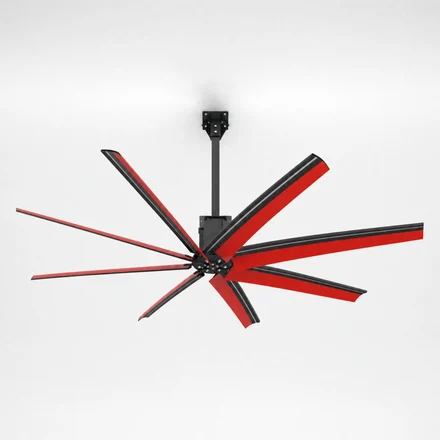
 HF800™
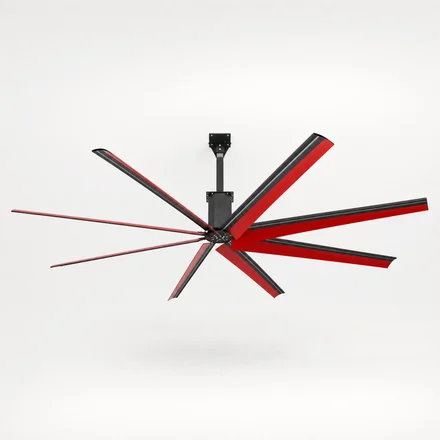 HF1200™
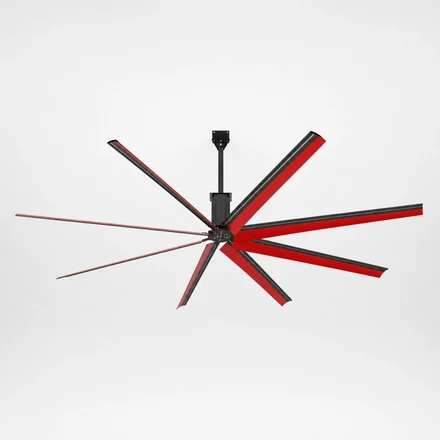 HF1600™
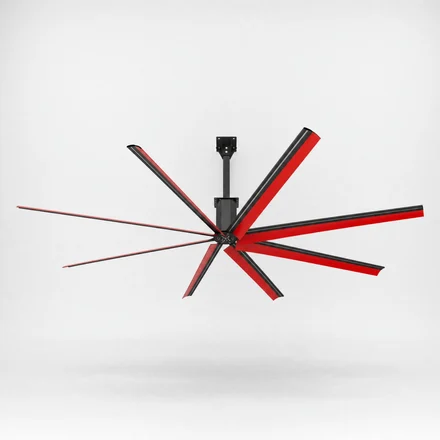 HF20™
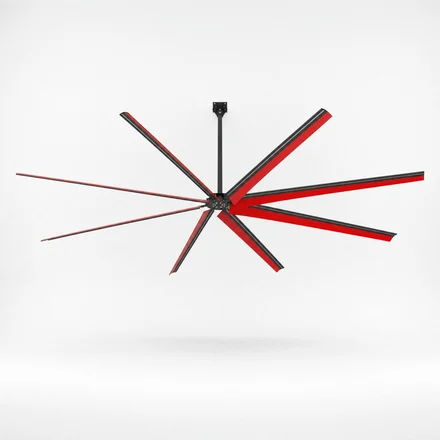 HF24™
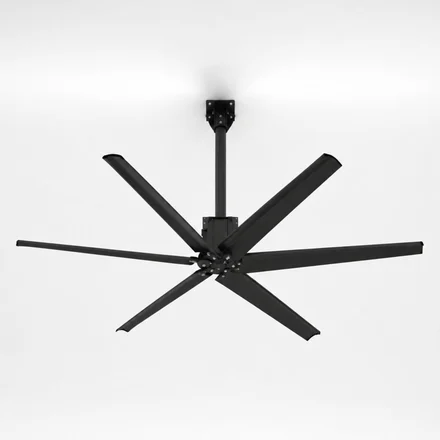 E6™ 10 Ft
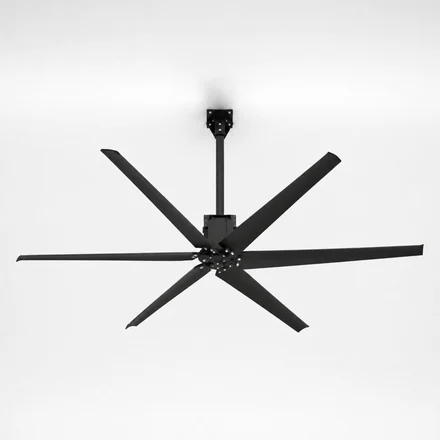 E6™ 12 Ft
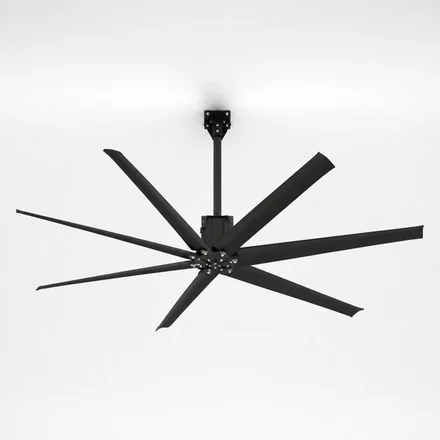 E6™ 16 Ft
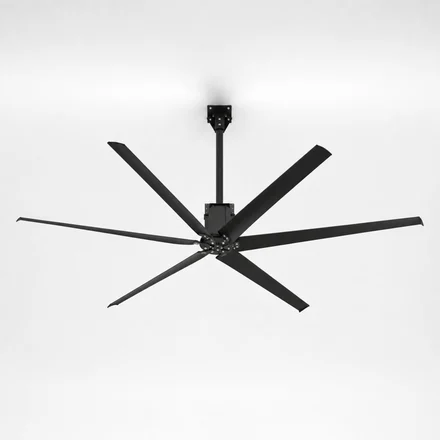 E6™ 20 Ft
What CFM actually means
CFM is cubic feet per minute. That is it.
It measures how much air a fan physically moves in sixty seconds, and it is the number people use to line up ceiling fans, HVLS fans, and industrial exhaust fans against each other. Same role horsepower plays for engines. One figure that lets you compare products built on completely different principles.
Why CFM tells you more than the diameter does
Two industrial fans, identical diameter, wildly different output. Happens constantly.
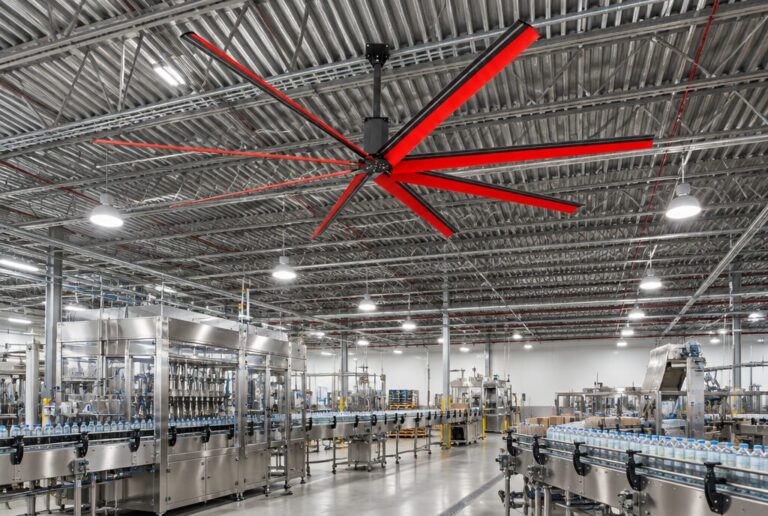
The HF1600 moves 92,298 CFM, the HF20 moves 233,605 CFM and the HF24 moves 259,438 CFM. CFM is tested according to ANSI/AMCA Standard 230-15.
Specifying an HVLS industrial ceiling fan?
Humongous Fan builds the American-made HF Series from 8 to 24 feet in Cleveland, Ohio, with integrated sprinkler shut-off and a NEMA 1 VFD controller. We will walk the specs with you.
Using CFM to size a fan
For open industrial space, find where people spend most of their time, measure those areas and size the fan by its direct breeze region.
That is a starting point, not an answer. Ceiling height moves it. Layout moves it. So does how much heat your process throws off. Which is why most facilities get sized individually instead of off a chart.

CFM isn’t the same as throw distance
This trips people up.
CFM tells you volume. It says nothing about how far the air travels. An HVLS fan puts out high CFM through a wide gentle discharge, so it blankets a lot of floor at comfortable speeds. A high-velocity industrial fan sends a narrow stream a long way. Different numbers, different jobs, and a spec sheet that only lists CFM will not tell you which one you are buying.
Read our guide to industrial fan efficiency next, or browse HVLS fans by CFM output.
Humongous Fan builds American-made HVLS industrial ceiling fans from 8 to 24 feet in Cleveland, Ohio. Request a free quote and we will size one for your building.


