
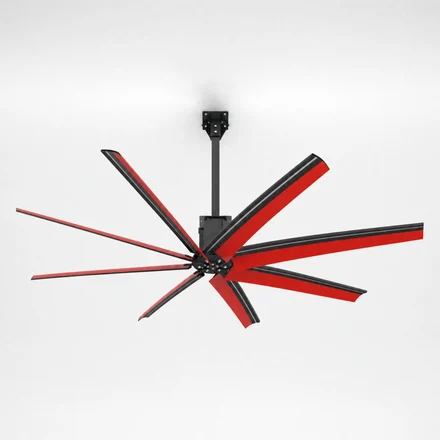
 HF800™
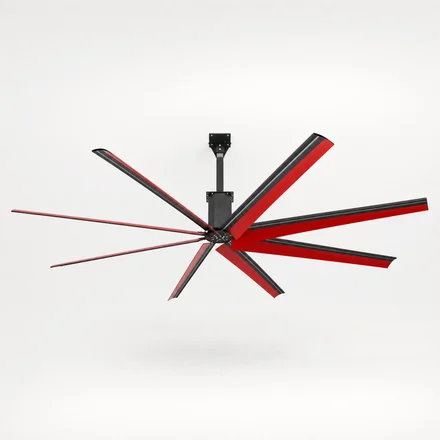 HF1200™
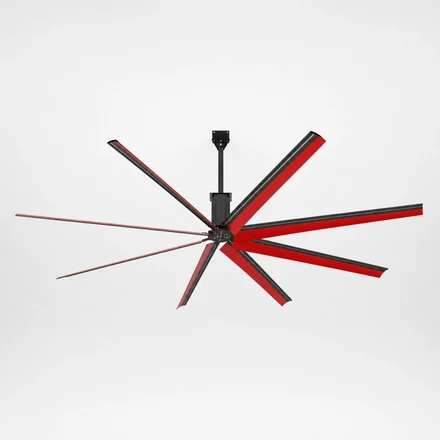 HF1600™
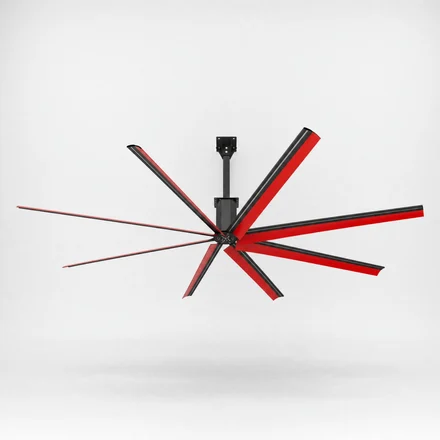 HF20™
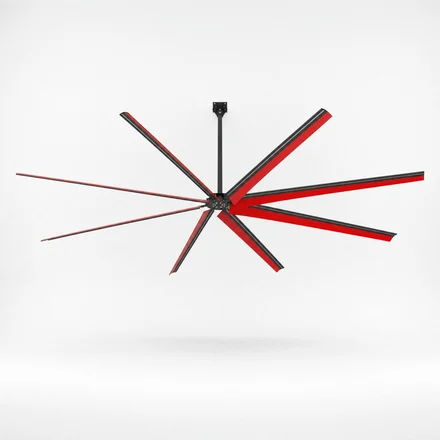 HF24™
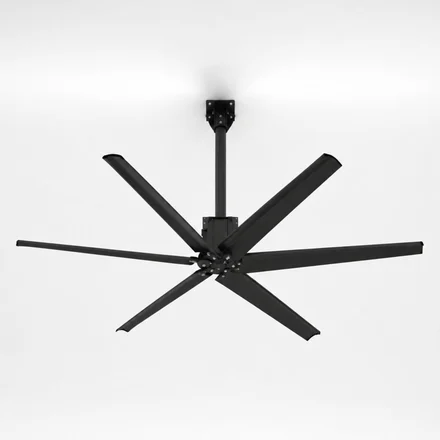 E6™ 10 Ft
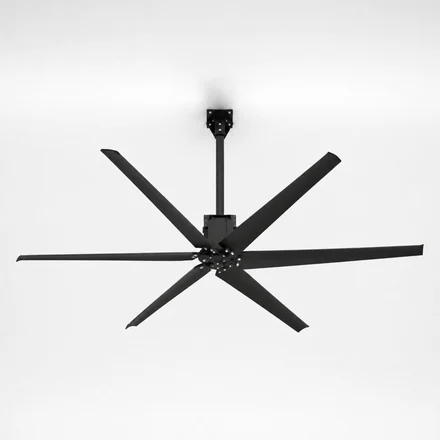 E6™ 12 Ft
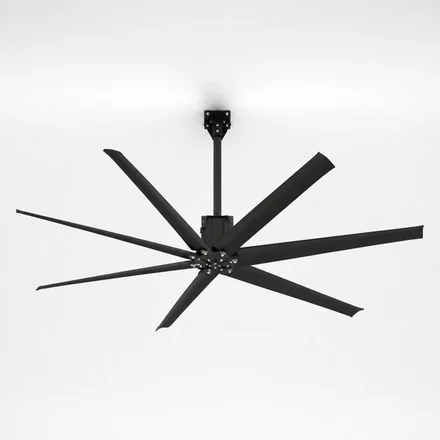 E6™ 16 Ft
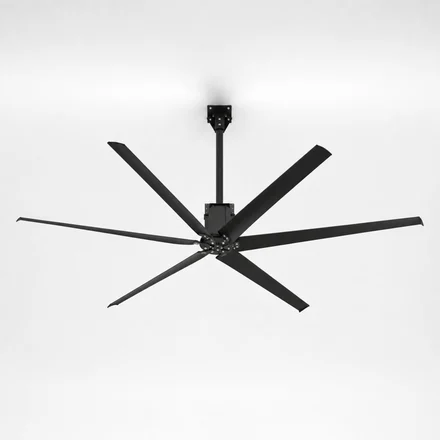 E6™ 20 Ft
Warehouse, shop, or production floor gets miserable in July, and an industrial fan is the first thing most facility managers reach for. Reasonable instinct.
The problem is that “industrial fan” covers everything from a small high-velocity floor blower to large overhead HVLS fans that move air across an entire building.
Pick the wrong type and you spend the money and still have hot spots. Here are the main categories, what they cost, and how to match one to your building.
What is an industrial fan?
Any heavy-duty fan built to move serious air in a commercial, manufacturing, agricultural, or storage environment.
The difference from a household fan is not just size. An industrial fan is engineered to run long hours, tolerate dust and temperature swings that would kill a consumer motor inside two seasons, and cover square footage measured in the thousands rather than the hundreds.
Two questions decide everything. How much air does it move, measured in CFM. And how evenly does it distribute that air across the space. Most buyers ask the first and forget the second.

The main types of industrial fans
High-velocity floor and drum fans
The portable blowers you see on every shop floor.
Cheap. And they move air fast in a narrow stream, which feels great if you happen to be standing right in front of one.
Coverage is the catch. The airflow dies off quickly, so covering a large area takes a lot of units, and every unit adds noise, another cord on the floor, and another motor drawing power.
Wall-mounted and exhaust fans
These pull stale or hot air out of the building rather than circulating it.
Genuinely useful for ventilation and fume removal. They will not produce the gentle full-floor air movement that keeps people comfortable, and they were never designed to, which is why buildings that install them and nothing else still end up with a comfort complaint by July.
HVLS fans (high volume, low speed)
Large-diameter overhead fans, generally 8 to 24 feet across, moving enormous volumes of air slowly and quietly.
One HVLS fan replaces dozens of floor units because it drives a broad even column of air down and outward across the whole floor rather than blasting one lane.
That is why HVLS became the standard in warehouses, manufacturing plants, hangars, and gyms. More detail on how HVLS overhead fans work.
Not sure which HVLS fan size you need?
Humongous Fan builds American-made HVLS industrial ceiling fans from 8 to 24 feet in Cleveland, Ohio. Give us your square footage and ceiling height and we will size the fan for you.
How much do industrial fans cost?
Depends on type and size, and the sticker price is misleading in both directions.
Portable high-velocity fans run $100 to $800 each. Then remember you need a lot of them for a large floor, and they keep charging you in electricity and replacements.
A commercial HVLS fan is a bigger upfront number that covers thousands of square feet off one low-energy motor. Which is why total cost of ownership almost always favors HVLS in a big space. Full breakdown in our guide on HVLS fan energy savings.

How to choose the right industrial fan
- Square footage and ceiling height. Large, open, high-ceiling spaces are ideal for HVLS. Small enclosed rooms may only need a mounted or portable fan.
- Coverage vs. spot cooling. If you need to keep a whole crew comfortable, prioritize even coverage over raw wind speed.
- Energy cost. Running many small fans for 10-12 hours a day adds up fast. One efficient overhead fan often cuts that draw dramatically.
- Noise. HVLS fans run quietly, which matters in gyms, showrooms, and anywhere people talk.
- Year-round value. Overhead fans also push warm trapped air back down in winter, reducing heating costs.
Why facilities choose HVLS
For most large facilities the math is not complicated. One HVLS fan replaces a wall of noisy floor units, runs on a fraction of the energy, and produces consistent comfort instead of scattered windy patches.
Humongous Fan builds American-made HVLS fans with Performance Engineered Blades™, engineered for maximum airflow at the lowest energy draw we can achieve. Customers report feeling up to 15°F cooler in summer and year-round energy savings up to 33%.
Not sure which size or type fits your building? Request a free quote and our team will spec it for you.


