
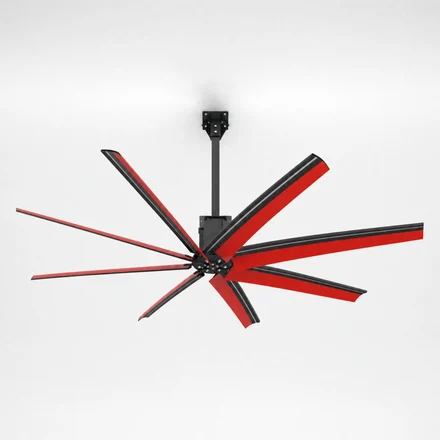
 HF800™
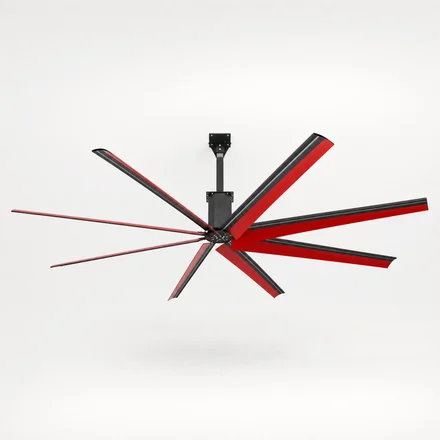 HF1200™
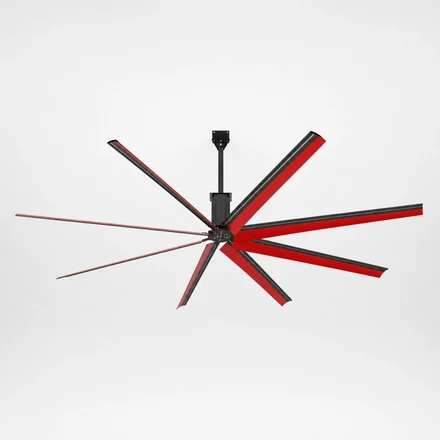 HF1600™
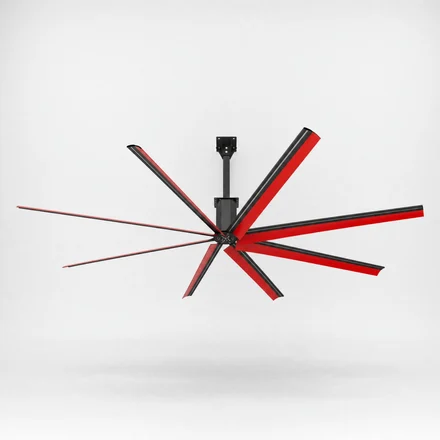 HF20™
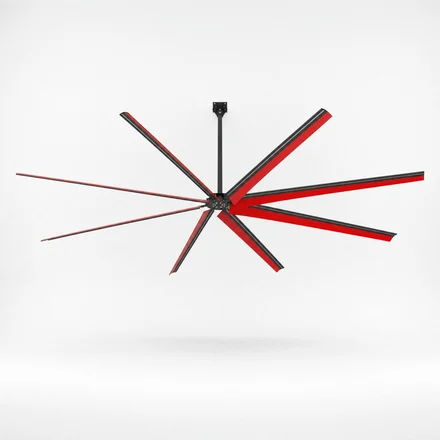 HF24™
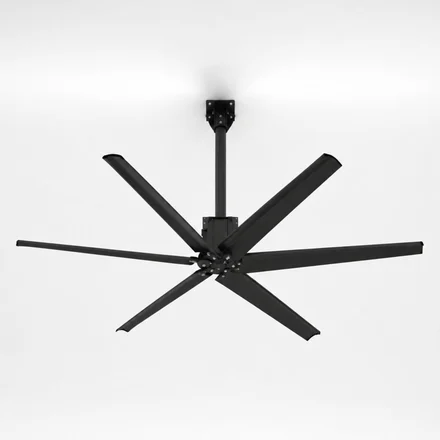 E6™ 10 Ft
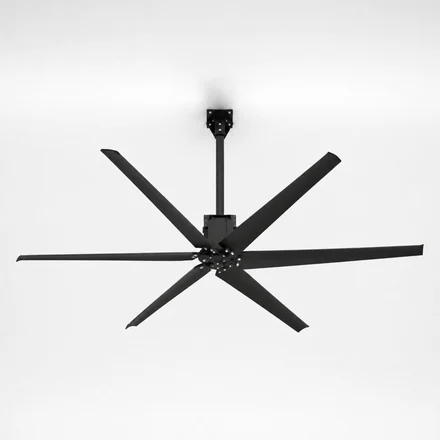 E6™ 12 Ft
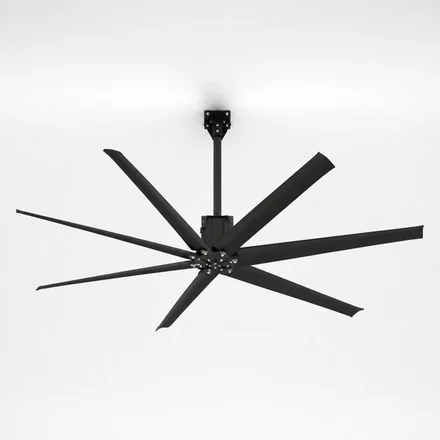 E6™ 16 Ft
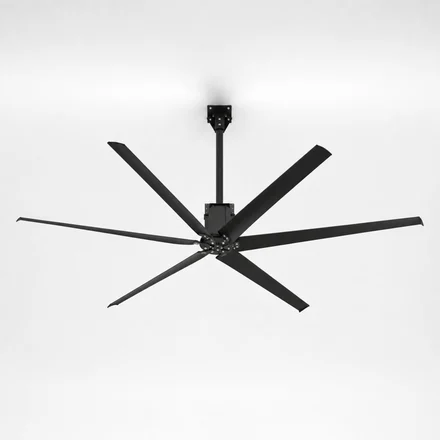 E6™ 20 Ft
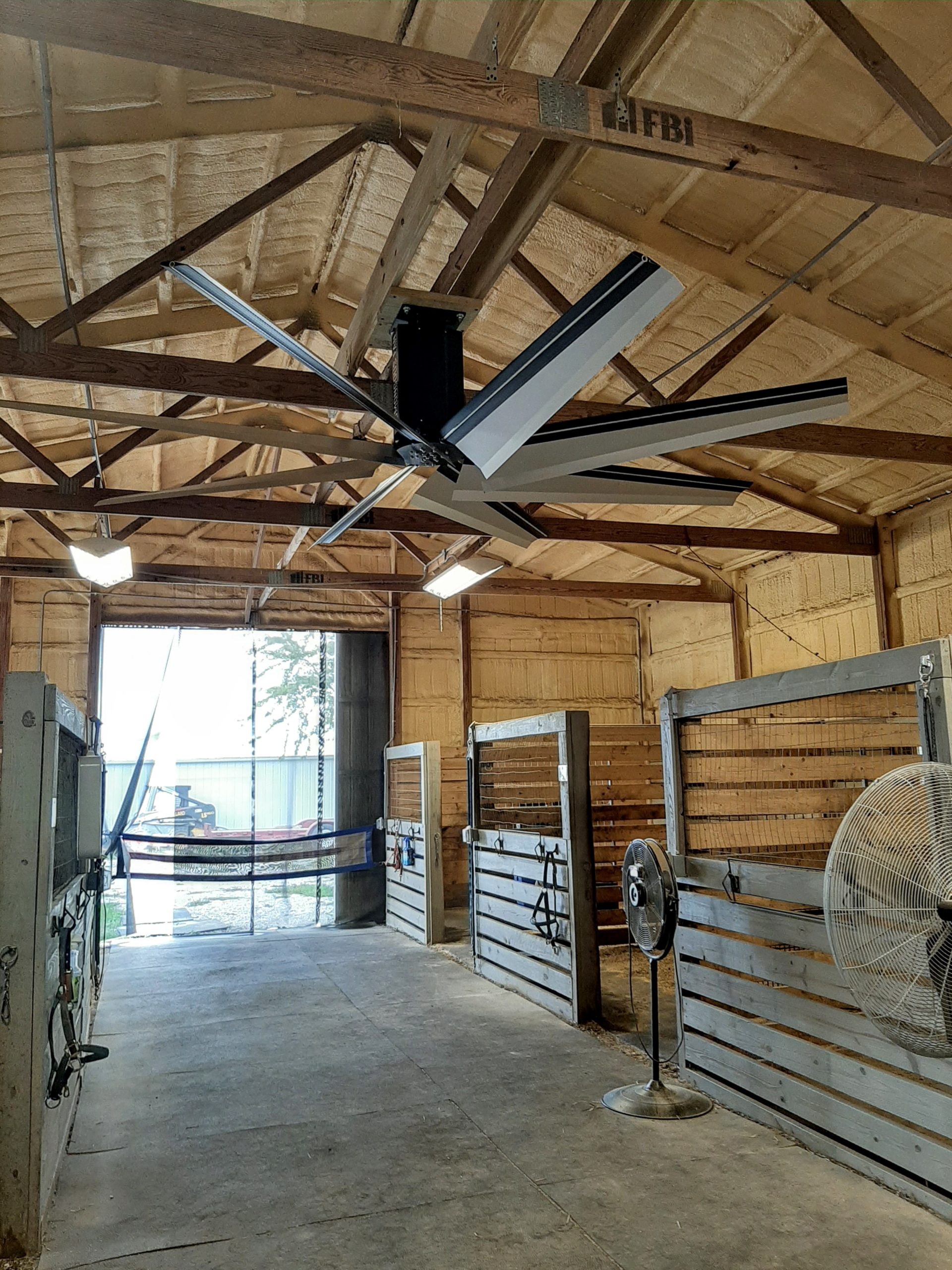
Livestock fans in most dairy barns are box fans and drum fans hung over the stalls, each one throwing a narrow stream of air at whatever happens to be in front of it. An HVLS fan works differently. One large, slow fan moves the air across a whole section of the barn, over the feed lane and the freestalls, without the noise and the jet of air that come off a row of small fans. For dairy barn ceiling fans, that difference is the whole case.
Why air movement matters in a cow barn
Cows put out a lot of heat, and a barn full of them in July holds it. Moving air across the animals helps them shed that heat, the same way a breeze helps a person standing on a hot shop floor. HVLS fans do that by moving a very large volume of air at low speed. The breeze pattern from a Humongous Fan stays wide and even at slow speeds, with less turbulence than a fan that has to spin fast to do the same work.
Ohio has a lot of dairy country to cover. Wayne County, south of Cleveland, is one of the state’s largest dairy counties, and farms across Wayne, Holmes and the surrounding counties run freestall and tie stall barns that can benefit from better air movement.
Sizing a barn by the breeze region
The way to size any HVLS fan is to find where the occupants spend their time, measure those areas, and match them to a fan’s direct breeze region. In a dairy barn that usually means the feed lane, the freestalls, and the holding pen before milking. Expect a breeze zone of about four times the fan diameter as a starting point.
Barns tend to suit the larger fans:
- HF1600, 16 feet: direct breeze region of 56 to 64 feet across, 92,298 CFM
- HF20, 20 feet: 70 to 80 feet across, 233,605 CFM
- HF24, 24 feet: 90 to 100 feet across, 259,438 CFM
The Essential 6 comes in the same diameters at 16 and 20 feet with the same breeze regions, in black. When a long barn needs more than one fan, space them no less than two and a half times the fan diameter apart.
Height above the animals and the equipment
Fan blades have to be at least 10 feet above the floor. In a dairy barn the real limit is usually higher than that, because the fan has to clear skid steers, feed mixers and anything else that drives down the alley. Plan the mounting height around the tallest equipment that uses the barn, then check the clearance the fan needs above it: 3 to 4 feet to the roof on the 16 foot fans, 4 to 6 feet on the 20 foot fans and 6 to 8 feet on the 24 foot fans, with 2 feet at the sides.
Mounting to barn framing
Standard mounts cover I-beam, Z-purlin and open joist structures, and 1, 2, 3 and 6 foot extensions are available to drop the fan to the right height under a tall roof. Mounting kits are standard, and modifications are made to order. Steel framed freestall barns usually fit the standard mounts. A wood post frame or truss barn should be looked at before the order is placed, so the mount is right for the structure. Our structural mounting guide goes through what we ask about.
Keep the fan away from light fixtures, sprinkler lines, water lines and conduit, and away from any overhead equipment that runs on a track.
Built for a working barn
Annual maintenance includes checking mounting fasteners in the tightening direction, inspecting the gear motor for oil leaks, checking safety cables, having a qualified electrician check electrical leads, and removing dust buildup.
Safety hardware is the same on every fan: safety cable, hub clips, hub retainer, dual method fastening of all joined components, and an integrated sprinkler shut-off. The warranty is 5 years on all parts.
Humongous Fan fans are designed for indoor use. A fan mounted where the sides of the barn are open to the weather, or under an open canopy, follows the supplementary tethering guide, and the Blade Tip Tethering System is available as an optional purchase when the install needs it.

Power out in the country
Farms do not always have three phase service, and that is fine for the smaller fans. The 0.5 HP models, which include the 16 foot fans, run on 110 to 120 V single phase, 208 to 240 V single phase or three phase, or 460 to 480 V three phase. The 1.5 HP 20 foot models run on 208 to 240 V single phase or three phase, or 460 to 480 V three phase. The 3.0 HP 24 foot models need three phase power. Whatever comes into the controller, the VFD sends three phase power to the motor.
Wire runs on a farm can be long, too. Supply wiring to the VFD should be 14 AWG or larger, and the installation manuals list the maximum cable run for each motor and voltage.
Winter in the barn
In cold weather, run the fan just below the speed that produces a noticeable breeze. The air keeps turning over without blowing on the herd. On the HF Series, that is a speed pot setting of 5 to 15 percent. On the Essential 6, set the speed from the VFD keypad.
Getting a fan into your barn
Humongous Fan designs and builds its fans in Cleveland, Ohio. Look through our agriculture and livestock fans, read about fans for horse barns and arenas, or send us the barn dimensions and the layout of the feed lane and stalls, and we will recommend a size.


