
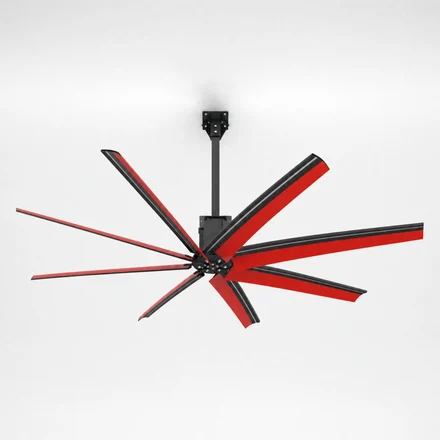
 HF800™
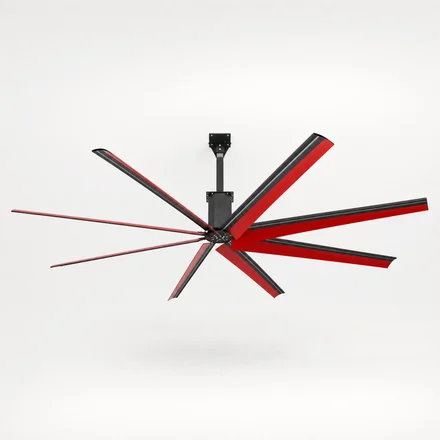 HF1200™
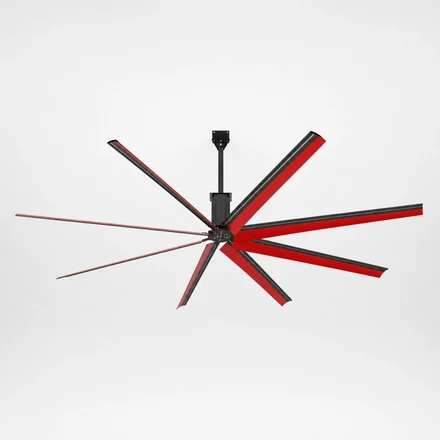 HF1600™
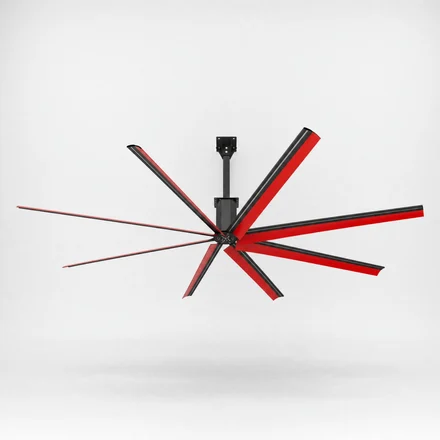 HF20™
 HF24™
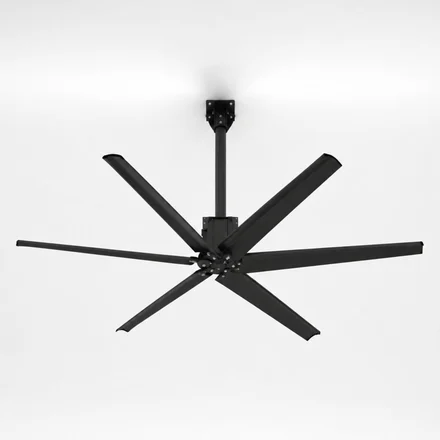 E6™ 10 Ft
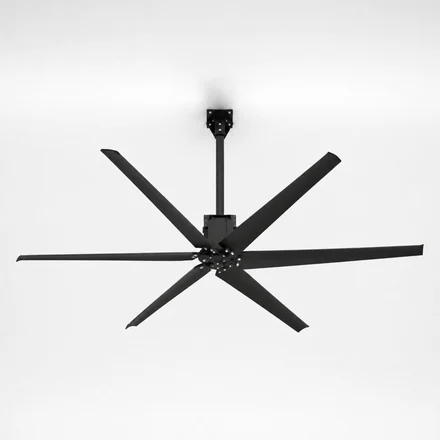 E6™ 12 Ft
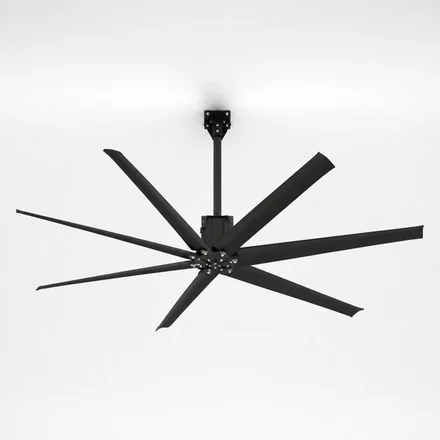 E6™ 16 Ft
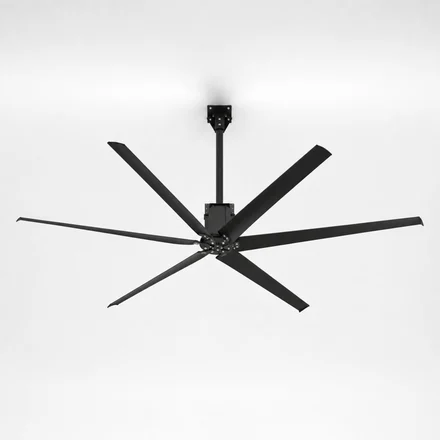 E6™ 20 Ft
Aircraft hangar fans are usually bought for summer, when the doors are open, the sun is beating on the roof and the mechanics working under a wing need air. That is the obvious season. A hangar is also one of the hardest buildings to heat, and the same HVLS fan that cools the crew in July can keep warm air from sitting uselessly at the roof all winter. Here is how to plan hangar fans for the full year.
See the overhead fan placement in Skip Stewart’s hangar installation.
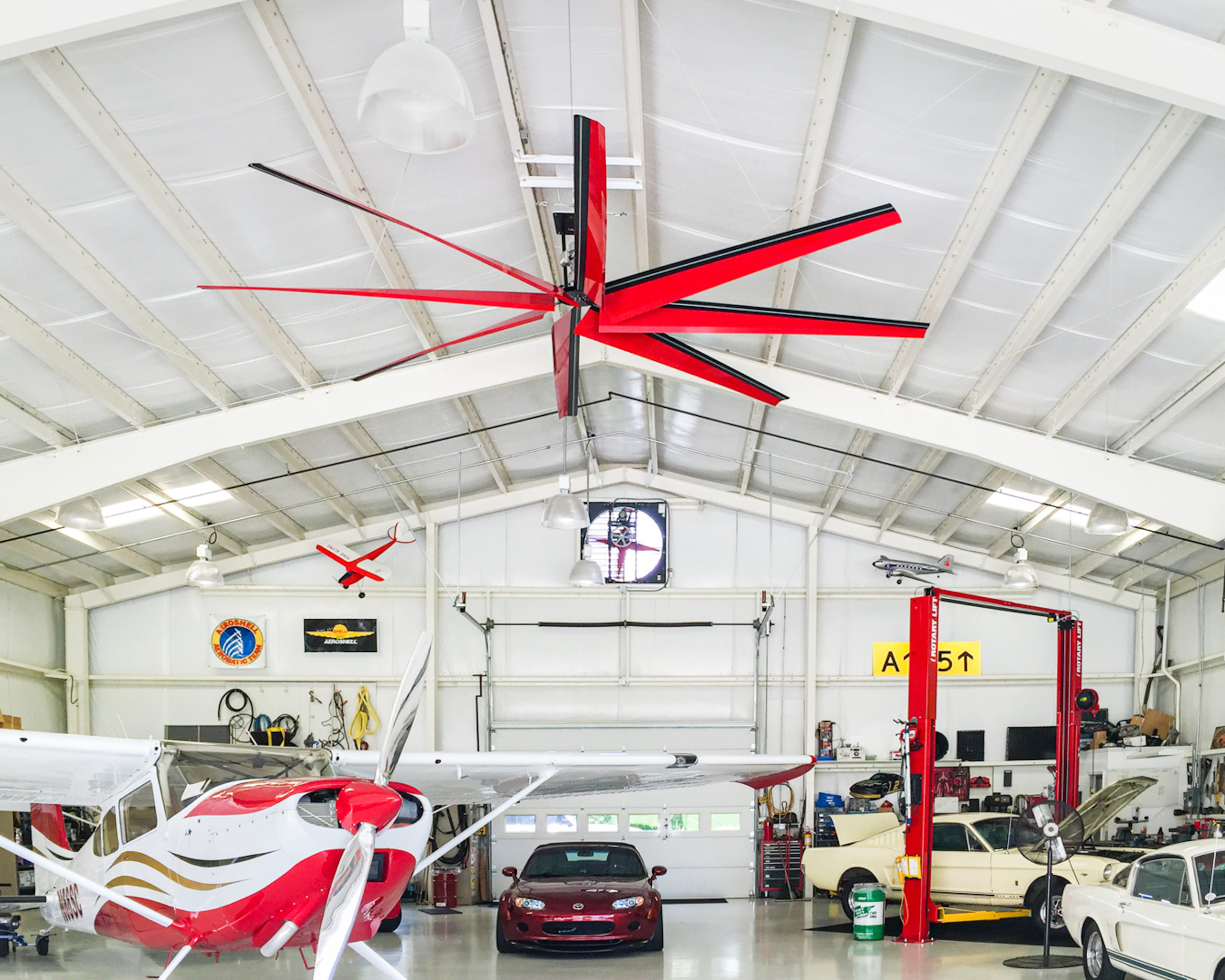
Why hangars are hard to keep comfortable
Hangars are tall, wide open buildings with a huge door on one end. In summer the door stays open for most of the day and the building takes on outside heat. In winter the door opens every time an aircraft moves, and the heat inside climbs straight to the roof, where it does nobody any good. Ceiling fans that would work in a shop are lost in that much volume.
An HVLS fan moves a very large volume of air at low speed. The breeze from a Humongous Fan stays wide and steady at slow speeds, with less turbulence than a small fan spinning fast, which matters around aircraft and light parts.
Summer: moving air over the crew
A large slow fan lowers the temperature people feel without changing the air temperature, so the mechanics on the floor stay comfortable through the afternoon. If the hangar or its offices are air conditioned, that lets the set point stay higher. We go deeper on summer use in our article on HVLS hangar fans for summer cooling.
Winter: getting the heat back down to the floor
In winter, run the fan just below the speed that produces a noticeable breeze. The fan turns the air over and brings the heat at the roof back down to the hangar floor without a draft across the work. On the HF Series, that is a speed pot setting of 5 to 15 percent. On the Essential 6, the speed is set from the VFD keypad.
Hangars around Cleveland know this problem well. From Burke Lakefront to Cuyahoga County Airport and the smaller fields out in Lorain, Geauga and Medina counties, winter runs long, and a heated hangar with a tall roof spends a lot of that heat on the empty space above the aircraft. Our heat stratification article explains what is happening up there.
Large fans for large floors
Hangars are usually the place for the biggest fans we build. Size them by the areas where people work: around the aircraft, along the benches, and in front of the parts room. Match those areas to the direct breeze region, the area that gets a working breeze at half of maximum speed with a clear floor.
| Model | Motor | Max RPM | CFM | Direct breeze region |
|---|---|---|---|---|
| HF20 (20 ft) | 1.5 HP | 49 | 233,605 | 70 to 80 ft diameter |
| HF24 (24 ft) | 3.0 HP | 62 | 259,438 | 90 to 100 ft diameter |
| E6 20 Ft | 1.5 HP | 49 | 197,178 | 70 to 80 ft diameter |
A smaller private hangar or a maintenance bay may only need a 12 or 16 foot fan. When a hangar needs more than one, space them no less than two and a half times the fan diameter apart.
Clearing tails, cranes and doors
Blades must sit at least 10 feet above the floor, and in a hangar the fan has to clear the tallest tail that will ever roll in, plus any equipment that lifts above it. Mount the fans away from overhead crane systems, light fixtures, sprinkler lines, HVAC equipment and conduit, and keep them clear of the door track and the opening itself. The 20 foot fans need 4 to 6 feet of space above them to the roof and the 24 foot fans need 6 to 8 feet, with 2 feet at the sides.
Standard mounts cover I-beam, Z-purlin and open joist structures, which covers most steel hangars, with 1, 2, 3 and 6 foot extensions to set the height. Fans hung outside the hangar or under an open canopy follow the supplementary tethering guide, and the Blade Tip Tethering System is an optional purchase for those installs.

Long wire runs
In a big hangar the controller is often a long way from the fan. On the HF Series, the 3 HP fan allows a maximum cable run of 1,640 feet on 208 to 240 V three phase and 980 feet on 380 to 480 V three phase. The HF24 draws 12.0 A at 208 to 240 V three phase or 6.0 A at 460 to 480 V three phase, and the HF20 draws 7.12 A or 3.50 A on the same two services. Supply wiring to the VFD should be 14 AWG or larger. Whatever the building supplies, the VFD sends three phase power to the motor.
The HF Series VFD is a NEMA 1 wall mounted unit with a safety disconnect, an on/off toggle and a speed pot, so the crew can switch between summer and winter settings in a few seconds. More on controls is in our HVLS fan controls guide.
Built to hang over an aircraft
Every Humongous Fan carries a safety cable, hub clips, a hub retainer, dual method fastening of all joined components and an integrated sprinkler shut-off. The gear motor is totally enclosed, fan cooled and lubricated for life, and the warranty is 5 years on all parts.
Humongous Fan designs and builds its fans in Cleveland, Ohio. See our aviation hangar fans or send us the hangar dimensions, door height and roof structure for a recommendation.


