
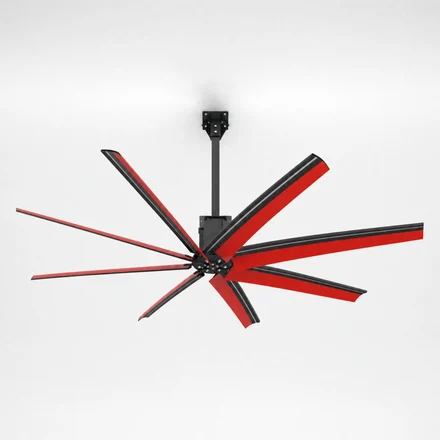
 HF800™
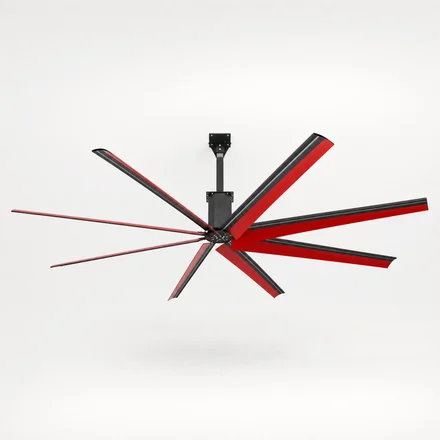 HF1200™
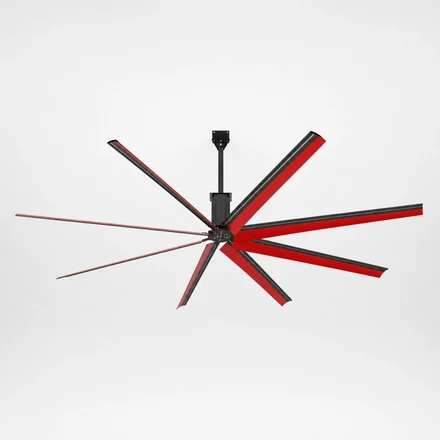 HF1600™
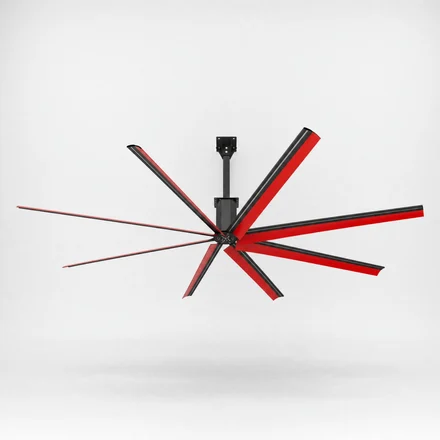 HF20™
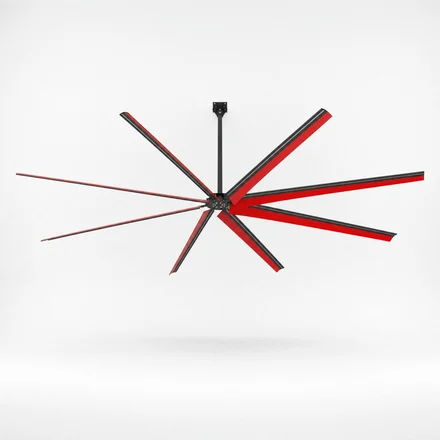 HF24™
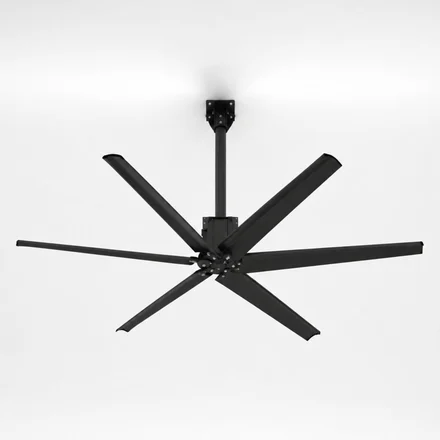 E6™ 10 Ft
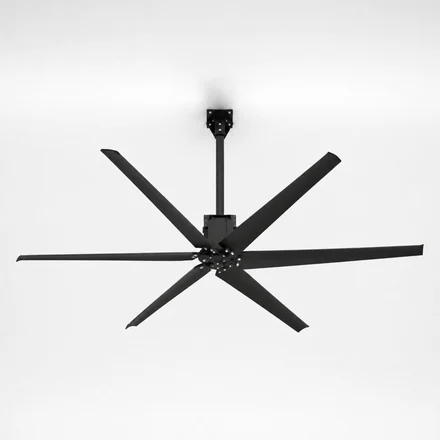 E6™ 12 Ft
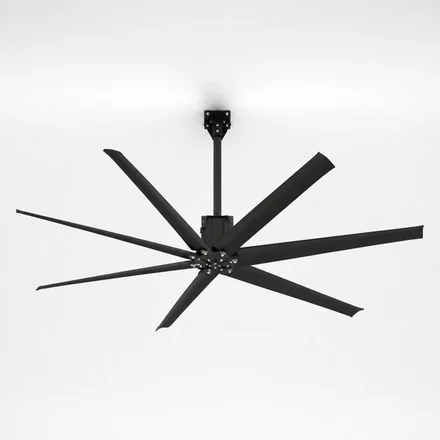 E6™ 16 Ft
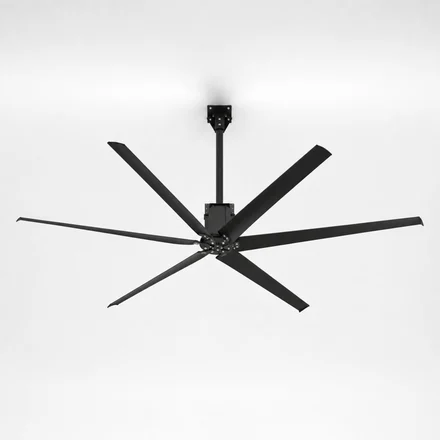 E6™ 20 Ft
Commercial ceiling fans for restaurants usually mean a row of residential style fans hung low over the tables. That works under a standard ceiling. In a dining room with exposed joists twenty feet up, a brewery taproom, a banquet hall or a food hall built inside an old warehouse, those small fans do very little, and a single large diameter HVLS fan does the job better.

Which restaurants are a fit
The deciding factor is ceiling height. Humongous Fan blades have to sit at least 10 feet above the floor, and every fan needs open space above it: 3 to 4 feet between the fan and the ceiling on the 8, 10, 12 and 16 foot models, with at least 2 feet of clearance at the sides. A dining room under a drop ceiling does not have that room. A converted industrial building usually does.
Cleveland has plenty of those. Ohio City, Tremont and the east bank of the Flats are full of dining rooms and taprooms built into old brick and steel buildings with the trusses left showing. Those rooms tend to share the same problem: the kitchen and the crowd put out heat, it rises into all that open volume, and the guests at the tables never feel much air.
Sizing for a dining room
Size the fan by where people sit. Measure the main seating area and match it to a fan’s direct breeze region, which is the area that gets a working breeze at half of maximum speed with a clear floor. As a starting point, expect a breeze zone of about four times the fan diameter.
For most restaurants that points to the smaller end of the lineup:
- HF800, 8 feet: direct breeze region of 28 to 32 feet across
- E6 10 Ft, 10 feet: 38 to 42 feet across
- HF1200, 12 feet: 42 to 48 feet across
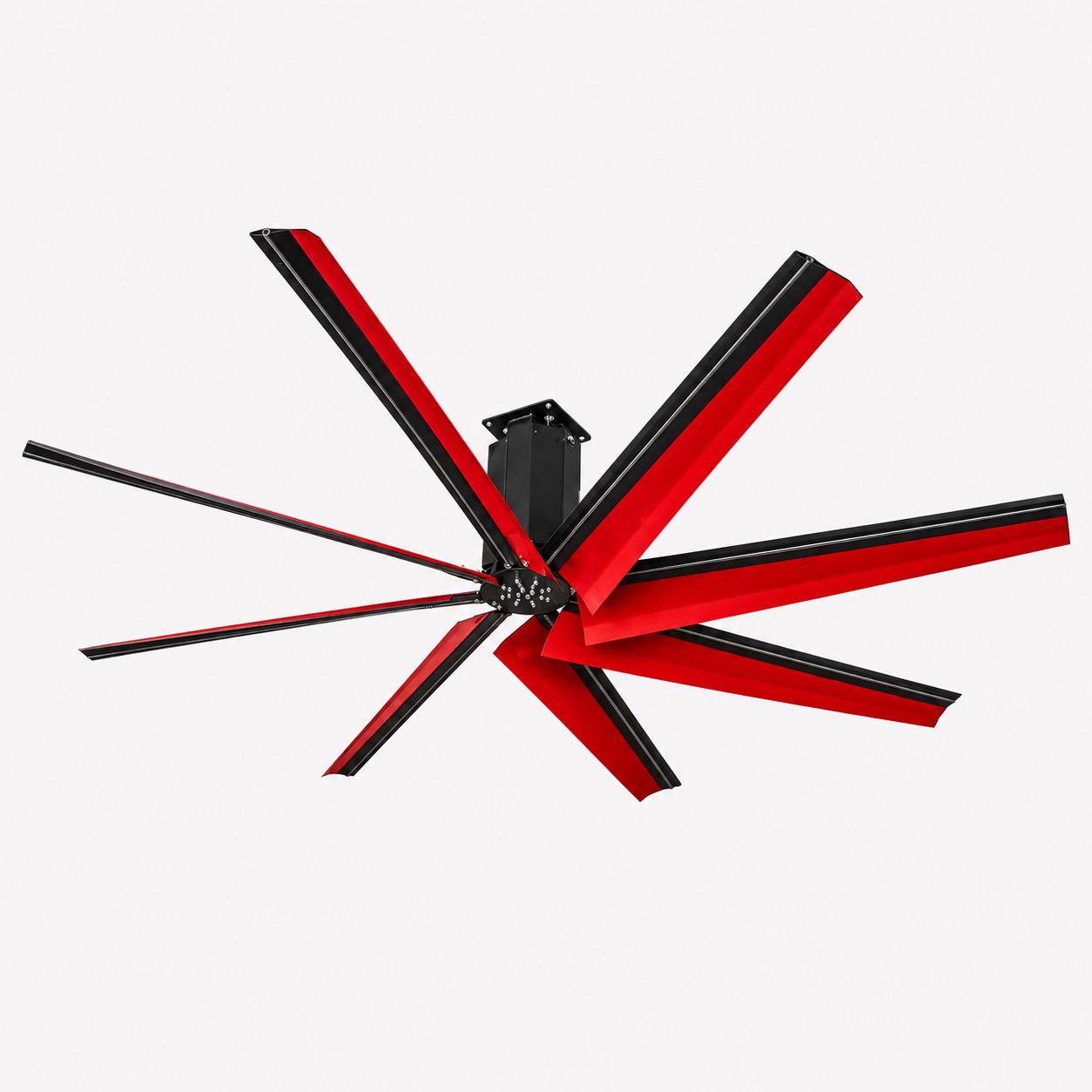
A long dining hall may want two fans instead of one large one. If you run more than one, keep them no less than two and a half times the fan diameter apart. Banquet halls and event rooms with larger floors can move up to the 16 and 20 foot models.
Noise at the table
People are trying to talk over dinner, so sound matters more here than it does in a warehouse. The 8 through 16 foot Humongous Fan models run under 57 dBA, measured directly beneath the fan at three quarter speed in an active work environment. They also turn slowly. The HF800 and HF1200 top out at 44 RPM, and at the speeds a dining room usually needs, the fan is turning slower than that. We cover sound in more detail in how loud HVLS fans are.
Matching the room
An HVLS fan in a restaurant is part of the design whether you plan for it or not. The HF Series comes in Brushed Aluminum, White, Black, Red, Yellow and Blue. The Essential 6 comes in black, which disappears against dark ceilings and painted ductwork. Pick the finish before the order goes in so it fits the rest of the room.
Comfort and the A/C bill in summer
A large, slow fan lowers the temperature people feel at the table without changing the temperature of the air. That means the air conditioning set point can stay higher without guests or servers feeling warmer. The breeze from a Humongous Fan stays broad and even at slow speeds, so it reaches the whole seating area without the choppy gusts a small fan throws at the nearest table.
Keeping the heat down low in winter
Tall dining rooms lose their heat to the rafters. Warm air rises and sits up against the roof while customers near the windows keep their coats on. Running the fan just below the speed that produces a noticeable breeze turns that air over and brings it back down to the tables. Nobody feels a draft, and the heat you paid for ends up where the customers are sitting. On the HF Series that is a low setting on the speed pot. On the Essential 6 the speed is set from the VFD keypad. More on winter operation is in our air destratification guide.
Day to day operation
An HVLS fan in a restaurant does not need much attention once it is up. On the HF Series, the wall mounted VFD has an on/off toggle and a speed pot, so the manager opening the place can turn it on and set the speed without a ladder or a remote. On the Essential 6, the speed is set from the VFD keypad. The gear motor is lubricated for life. When you do routine maintenance, the thing to look for is any sign of an oil leak at the motor. Our HVLS fan maintenance guide lists the rest.
Kitchens and patios
The kitchen is a different question from the dining room. Hood exhaust and make up air are designed together, and moving air near a hood can work against the system, so talk to whoever designed the kitchen ventilation before putting any fan back there.
Humongous Fan fans are designed for indoor use. A covered patio or a space under a canopy needs a supplementary tethering setup, and the Blade Tip Tethering System is available as an optional purchase when an installation calls for it.
Planning the install
Every fan mounts to I-beam, Z-purlin or open joist structures, with 1, 2, 3 and 6 foot mounting extensions available to bring the fan down to the right height under a tall roof. Keep it away from light fixtures, sprinklers, piping and HVAC equipment. Every fan includes a safety cable, hub clips, a hub retainer and an integrated sprinkler shut-off, and is covered by a 5 year warranty on all parts.
Humongous Fan designs and builds its fans in Cleveland. If you run a restaurant, taproom or event space and want to know whether an HVLS fan fits the room, look through our hospitality and event venue fans or send us the room dimensions and ceiling height.


